
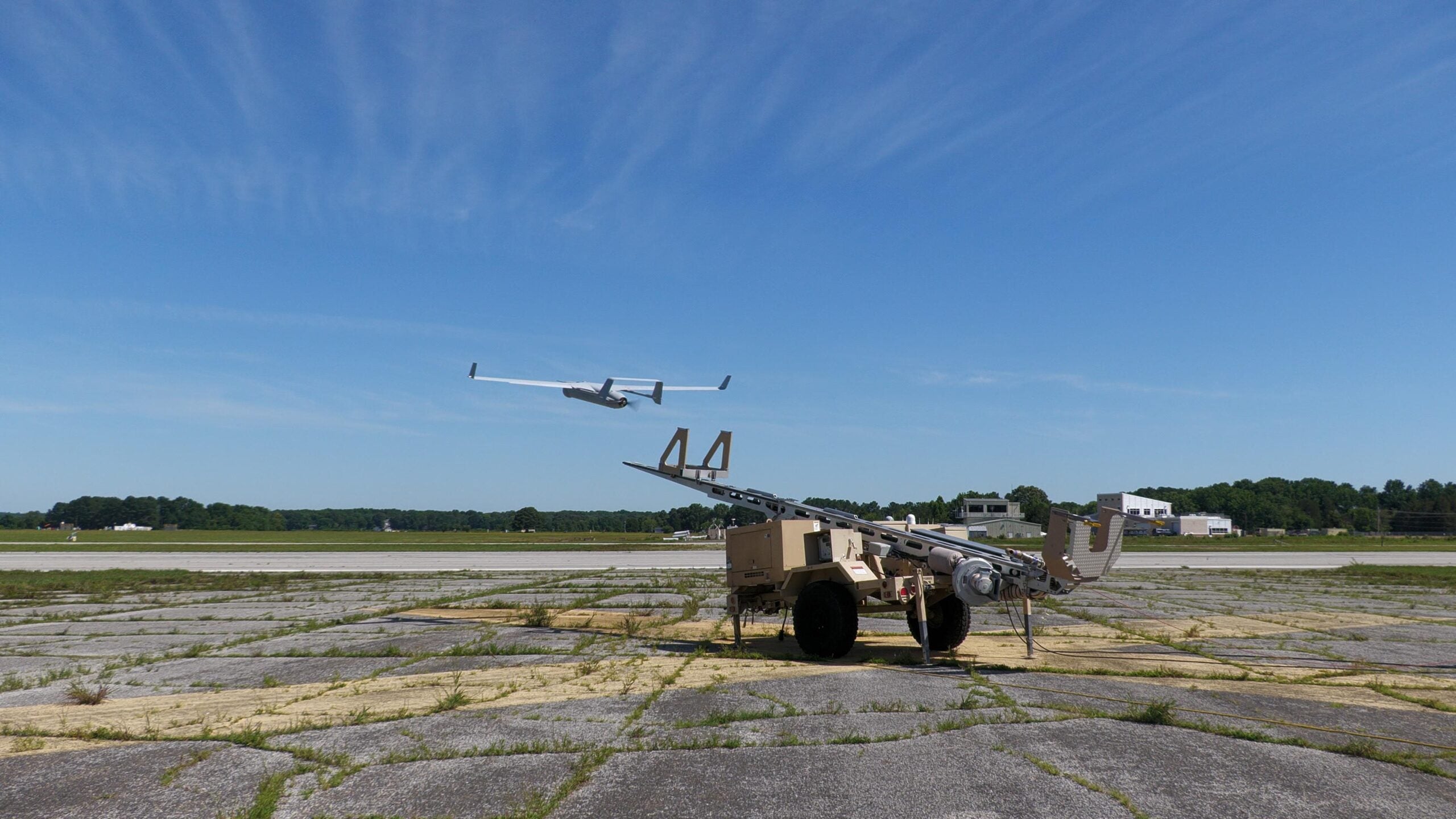
The US Navy has tested a new ground-based detect and avoidance system, called Guardian, to validate its capabilities for providing crewed/uncrewed teaming safety.
The first flight test was performed at Naval Air Warfare Centre Aircraft Division’s (NAWCAD) headquarters in Patuxent River on 28 July.
Go deeper with GlobalData

Discover B2B Marketing That Performs
Combine business intelligence and editorial excellence to reach engaged professionals across 36 leading media platforms.
During this test, the Uncrewed Air Test and Evaluation Squadron (UX) 24’s air vehicle operators flew two RQ-21 Blackjack aircraft towards each other, while Guardian operators monitored screens displaying the systems’ approach.
As soon as the two RQ-21s came within a 400ft radius of each other, Guardian alerted its operators of a potential collision and made avoidance manoeuvre recommendations to help avoid it.
Blackjack air vehicle operator lieutenant commander Alex Dulude said: “Looking ahead, we’ll put Guardian through complex tests to confirm it will reliably handle congestion in busiest airspaces as we work toward Federal Aviation Administration (FAA) certification which could significantly reduce Stingray’s developmental test time and costs.”
Guardian uses ground-based sensors to establish communication with operators at ground control stations.
US Tariffs are shifting - will you react or anticipate?
Don’t let policy changes catch you off guard. Stay proactive with real-time data and expert analysis.
By GlobalDataIt supplies them with visual signals for navigation and traffic avoidance manoeuvres, which improves airspace safety.
The technology is the only ground-based system prototyped in response to FAA mandates that limits uncrewed systems from operating in airspaces alongside crewed aircraft.
The test team expects the Naval Air Systems Command to grant certification by the end of next fiscal year.
The team is aiming to use this technology on MQ-4C Triton, MQ-8 Fire Scout and future small tactual uncrewed aerial system (UAS) programmes.
Initially, Guardian was developed in partnership with the US Army’s Redstone Test Centre.
Currently, the system is being funded by Test Resource Management Centre of the US Office of Secretary of Defense and the MQ-25 Stingray’s programme.



