
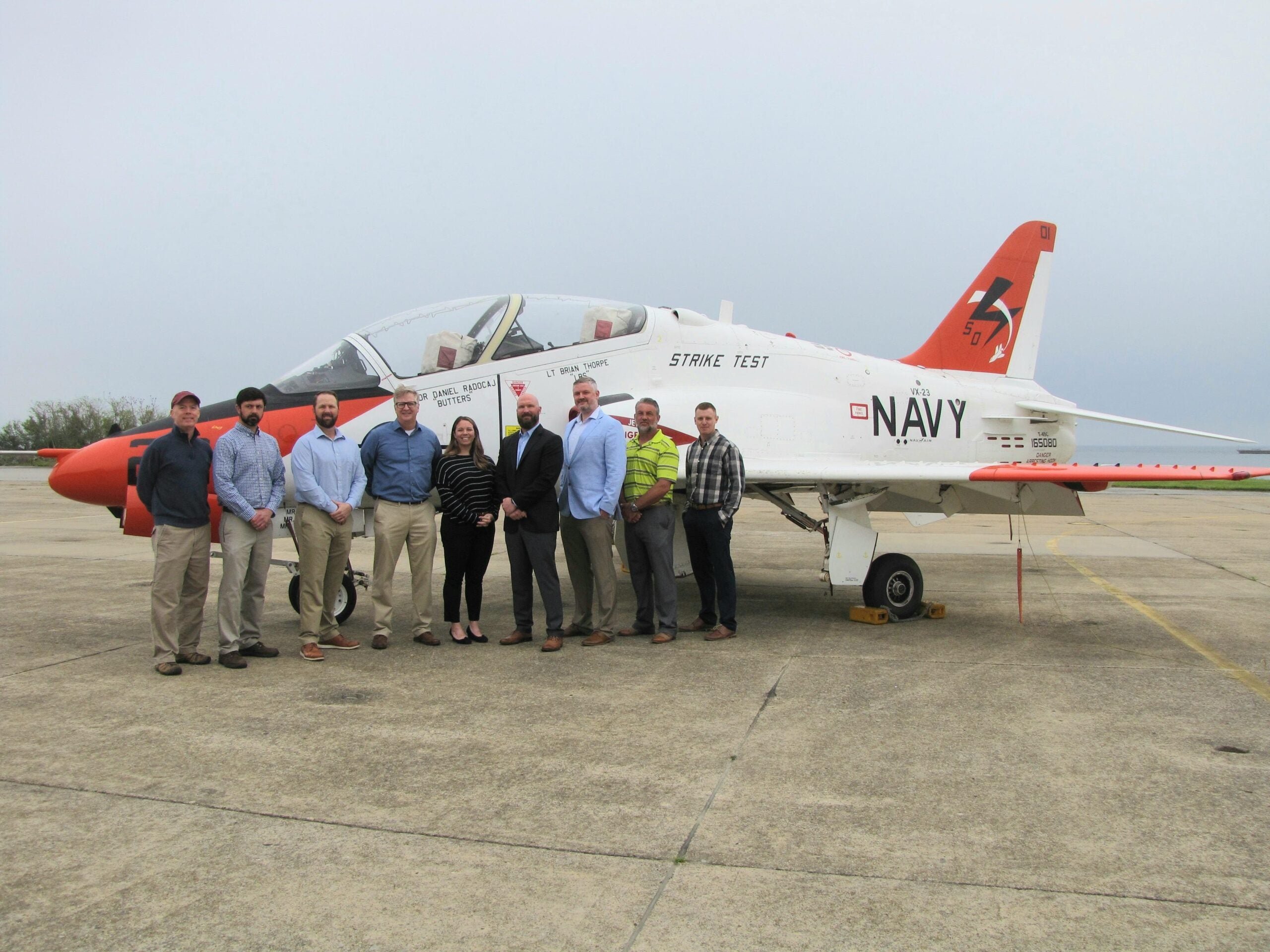
The US Navy’s Air Combat Electronics programme office (PMA-209) has completed its first flight test of the mission computer alternative (MCA) on the T-45 trainer aircraft.
This move is aimed at improving the readiness of the legacy system.

Discover B2B Marketing That Performs
Combine business intelligence and editorial excellence to reach engaged professionals across 36 leading media platforms.
PMA-209 undertook the test in collaboration with Air Test Evaluation Squadron (VX) 23 and the Naval Undergraduate Flight Training Systems programme office (PMA-273).
On 30 March, the three units executed the T-45 aircraft flight test at Patuxent River to analyse the design replacement for the present mission display processer.
VX-23 test pilot lieutenant Alex Mensing said: “The flight was flown successfully, proving MCA is on the right track.
“We know what needs to be improved and will continue to work together to bring an accurate and reliable system to the fleet.”
According to PMA-273, the new mission computing solution primarily aims to address the potential issues of the US Navy’s ageing platform.
PMA-273 is planning to use MCA to support further capabilities, including required navigation performance/area navigation (RNP/RNAV).
The MCA is a hardware open systems technologies (HOST) conforming mission computer.
It minimises the need for regular software and hardware updates for mission computers.
Claimed to be cost-effective and rapidly adaptable, the technology can also support platform and processing requirements.
MCA is expected to provide RNP/RNAV capabilities soon.
PMA-209 common mission computers team lead Jeff Williamson said: “This technology will enable accelerating new capabilities to the fleet, at reduced cost, while paving the way for it to be employed in the naval aviation systems that our warfighters already have.”
The US Navy will use the investments made during the development of MCA to reduce the cost of developing future MCA iterations.
Furthermore, the navy will reduce the software and hardware logistics lifecycle funding footprint by leveraging common, commercial-off-the-shelf (COTS) hardware and software development.


