
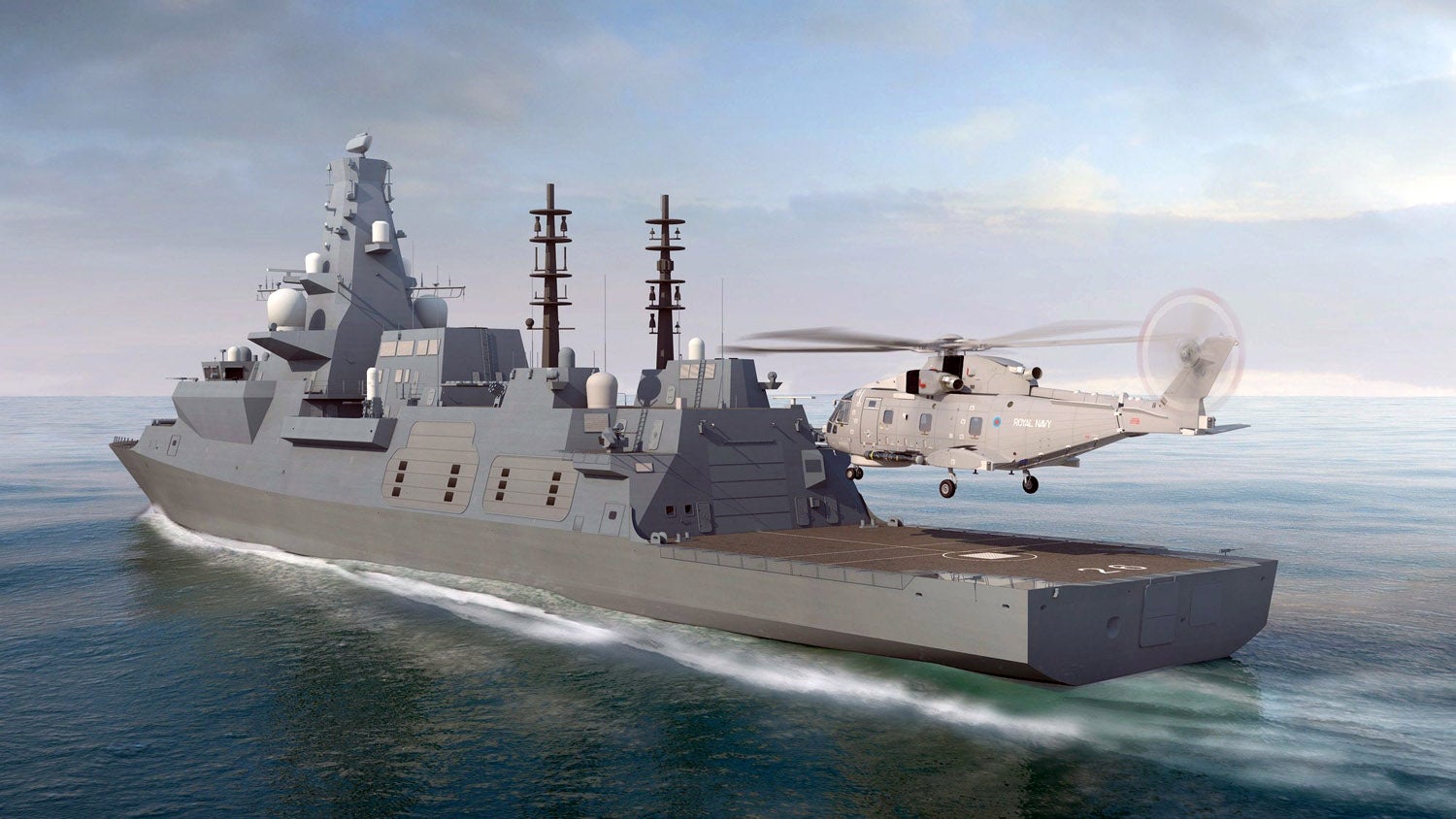
The British Royal Navy’s eight future City-class Type 26 anti-submarine warfare frigates are set to be equipped with Selective Catalytic Reactors.
The next-generation warships are being built by BAE Systems at its Govan yard on the Clyde.

Discover B2B Marketing That Performs
Combine business intelligence and editorial excellence to reach engaged professionals across 36 leading media platforms.
BAE Systems is under contract to deliver the first three frigates of the Type 26 fleet including, HMS Glasgow, HMS Cardiff, and HMS Belfast.
A 3m-tall box fitted with large-scale filters, the Selective Catalytic Reactor will reduce the impact of the navy’s operations on the environment.
The converters reduce majority of the nitrogen oxides (NOx) emissions by spraying a urea solution on the exhaust fumes released from the diesel generator.
The process involves the production of water and oxygen.
Type 26 frigate programme senior marine engineer officer commander Richard Wadsworth said: “The urea we will use is effectively the same ‘AdBlue’ solution that you see sold in fuel station forecourts for trucks and vans.
“It thermally decomposes in the hot exhaust and reacts with NOx to produce water and nitrogen. It reduces NOx emissions, which is good for the environment.
“It means that the Type 26s will be ‘IMO Tier III compliant’ for NOx emissions and will be able to operate worldwide including in several ‘special areas’ which have higher emission regulations.”
Once the catalytic converter is equipped, it will also allow the frigates to meet the operational standards of heavily regulated waters including, the North Sea and the US Eastern Seaboard.
The Type 26 ships will replace the UK Royal Navy’s Type 23 frigate fleet.
The future Type 26 fleet will perform wide range of operations including counter piracy, complex combat scenarios, humanitarian and disaster relief, among others.
Besides, a version of catalytic reduction system has already been equipped in the Royal Navy’s patrol ships, HMS Spey and HMS Tamar.
The two patrol ships are currently on a five-year mission in the Indo-Pacific region.


