
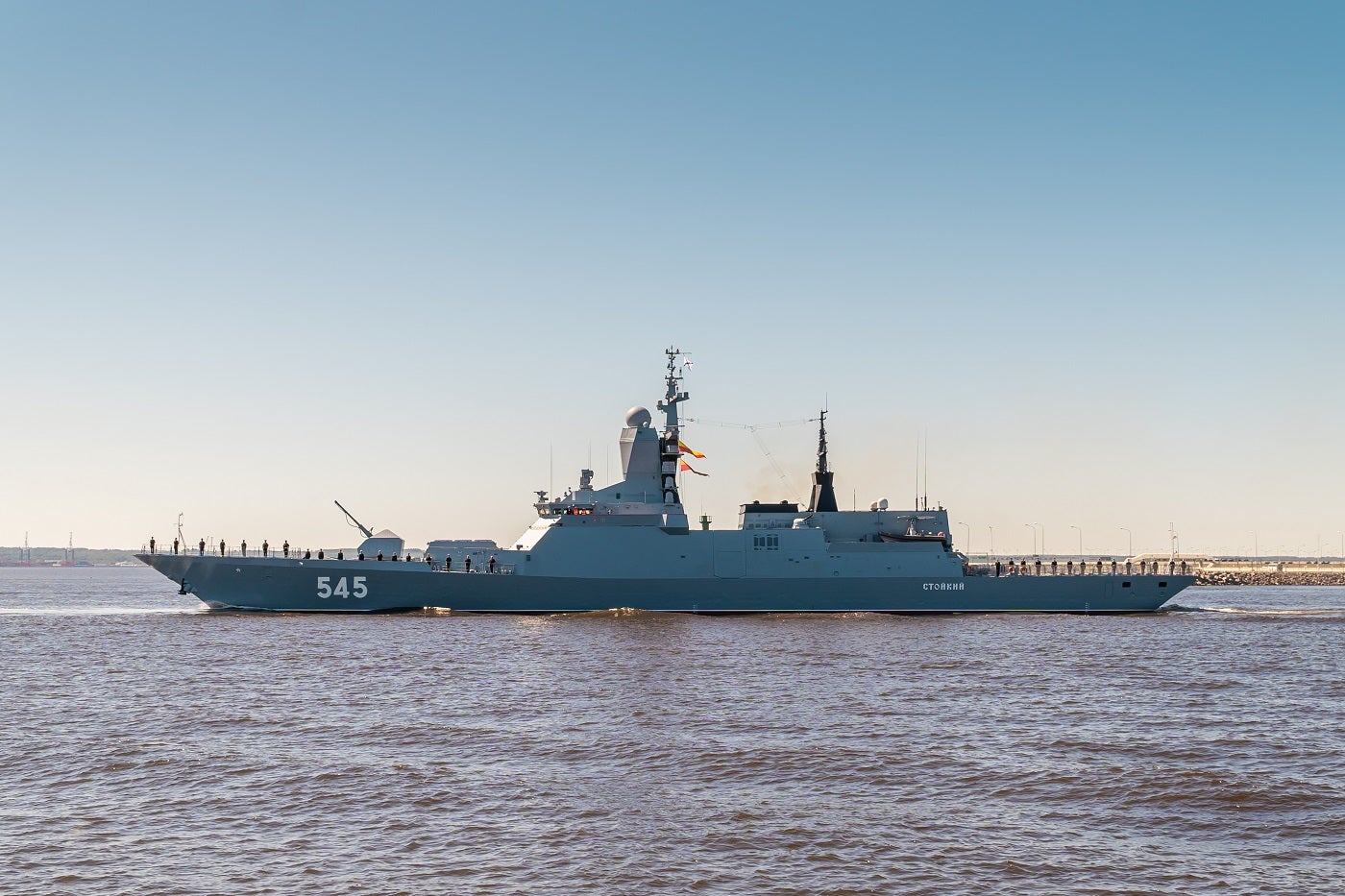
The Baltic Fleet’s Stoikiy corvette recently conducted a series of planned missile firings in the Baltic Sea.
The missile firing drills conducted by the Russian corvette Stoikiy in the Baltic Sea hold geopolitical implications, particularly for the Baltic states of Estonia, Latvia, and Lithuania, which were once part of the Soviet Union.
Go deeper with GlobalData


Discover B2B Marketing That Performs
Combine business intelligence and editorial excellence to reach engaged professionals across 36 leading media platforms.
Using the Redut shipboard vertical launch system, these exercises targeted surface vessels and airborne threats within the Fleet’s maritime training zone. The controlled firings saw a missile engage a surface target at a distance from the ship.
Notably, an aerial target representing a small, manoeuvring aerodynamic threat was neutralised during these exercises, showcasing the Stoikiy’s weaponry and targeting systems. An added layer of complexity was added to the drills. The presence of simulated electronic countermeasures, creating a jamming environment, tested the corvette’s readiness and adaptability.
The Ministry of Defence of the Russian Federation has claimed that the safety of these manoeuvres was ensured. The Baltic Fleet’s maritime training zone, where these exercises unfolded, was temporarily declared off-limits for civilian shipping and aviation flights to ensure the security of all parties involved.
Similar to the US Navy’s LCSs, the Derzky-class corvettes (Project 20386) of the Russian Navy are based on the principle of modularity, according to GlobalData’s “The Global Naval Vessels and Surface Combatants Market 2023-2033” report. The Stoikiy corvette is a Steregushchiy-class corvette.
The report continues to outline that, at present, navies worldwide are shifting towards corvettes equipped with advanced missile firing capabilities. They are relatively cheap to build and operate compared to frigates and destroyers.
The coordinated efforts of over ten surface ships and support vessels from the Baltic Fleet ensured a protective shield around the missile launches.
Given the recent events unfolding in Ukraine, another former Soviet territory, these exercises understandably raise concerns among the Baltic nations. The proximity of these drills to their borders underscores the fragile security situation in the region.
The Baltic states have long been cautious of Russian military activities in the Baltic Sea, and the Stoikiy’s precision missile firings will likely add to their apprehensions. The lessons drawn from Ukraine’s experiences over the past year and a half will have heightened the vigilance of these Baltic nations, emphasising the importance of ongoing NATO support and cooperation in ensuring their security and sovereignty in the face of regional challenges.
While these corvettes and support ships focused on safeguarding the firing, they fulfilled their broader mission objectives, encompassing anti-submarine warfare, air defence, mine countermeasures, and various other tasks outlined in the Fleet’s comprehensive combat training plan.


