
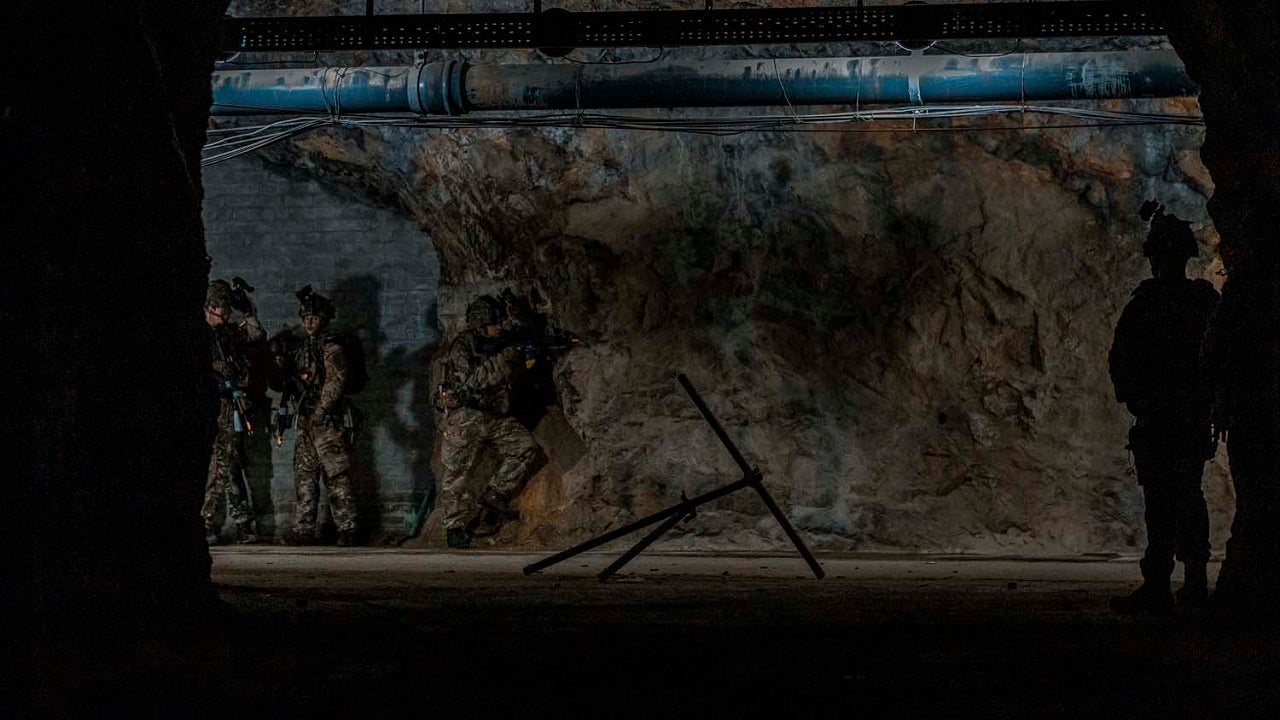
The British Royal Marines have added new technologies to boost their training in Gibraltar during Exercise Serpent Rock.
The two-week exercise involved practicing techniques, such as scaling cliff faces and struggling to get through Gibraltar’s tunnels, to better protect the country’s nuclear deterrent.
Go deeper with GlobalData


Discover B2B Marketing That Performs
Combine business intelligence and editorial excellence to reach engaged professionals across 36 leading media platforms.
Over 80 marines from 43 Commando Fleet Protection Group from Scotland participated in the exercise.
The Clyde Naval Base commandos used drones and robots to conduct amphibious operations, daring cliff assaults, and a close-quarters battle in the tunnels.
The marines used Remotely Piloted Aerial Systems (RPAS) and ground-based robots named ‘Throwbots’.
The systems were designed to provide commandos on the battlefield with live data to inform crucial decisions.
The addition of new kits to the training is part of the Future Commando Force modernisation.
The commandos also patrolled the streets, thoroughfares, and the narrow alleyways and passages of Gibraltar to test the ‘guile and agility’.
43 Commando P-Squadron officer commanding major Tom Baybutt said: “We’ve sought to integrate new Future Commando Force concepts, so that in addition to the traditional commando skills of amphibious operations and vertical assault, we’ve included some new technology available to us.
“The RPAS were put to good use, with the marines flying them at night and then scaling cliffs to assault the objective. Using the drones allowed us to work out the best method of entry to the target and the number of adversaries on the ground.
“The ‘Throwbot’ is another system that we can put into confined spaces. We can steer it remotely to understand the shape and size of confined spaces and identify any threats.”
Additionally, they used new situational awareness tools including, the Android Team Awareness Kit (ATAK) and specialist protective equipment.
In a separate development, Royal Navy Fleet Diving Squadron’s Expeditionary Diving Group divers have trained with drones.
The eight-diver team is part of a wider navy task force, which includes HMS Albion, HMS Dragon, RFA Lyme Bay, and Royal Marines from 40 and 47 Commando.


