
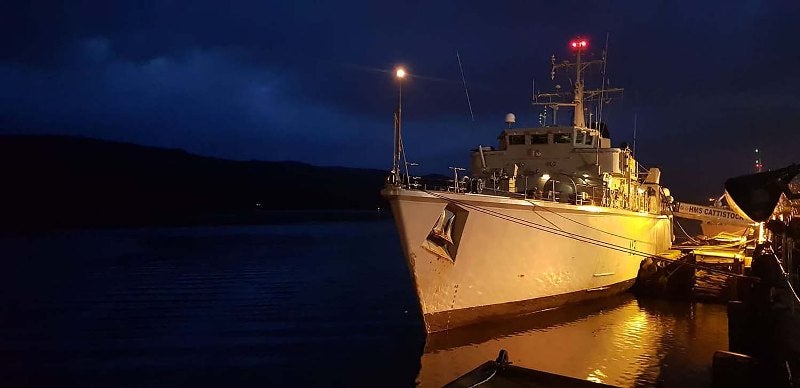
British Royal Navy minehunter HMS Cattistock has set out on a whistle-stop Nato assignment in the eastern Baltic region for the next seven weeks.
The Hunt-class ship left Naval Base Clyde in Scotland after completing a month of pre-deployment training.
Go deeper with GlobalData


Discover B2B Marketing That Performs
Combine business intelligence and editorial excellence to reach engaged professionals across 36 leading media platforms.
Over the week, the 750t vessel will travel eastwards and join the Standing Mine Countermeasures Group 1, the Nato force responsible for detecting and removing mines and historic ordnance from the waters of northern Europe.
The primary task of Cattistock, the divers and mine warfare specialists / Seafox remote-controlled submersible operators will be to tackle the debris of past conflicts still lying on the bed of the Baltic.
During port visits in the eastern Baltic, divers from the British vessel will also share their experience and knowledge of dealing with explosive ordnance with bomb disposal experts from other countries.
The 38-year-old Cattistock is the second oldest vessel in the Royal Navy and includes the latest minehunting systems.
The vessel left Portsmouth for Loch Goil for the completion of engineering trials before undergoing a fortnight of intensive training and assessment in preparation for the Nato mission.
All Royal Navy ships intended for deployment on frontline duties are required to pass pre-season operational sea training.
While frigates and larger vessels are assessed near Plymouth, smaller vessels proceed to western Scotland for the assessment.
After the assessment, the vessel will be protected from a variety of threats, such as fires, flood and fast attack craft. It will also be able to find and neutralise mines.
During anti-mine operations, the team is expected to use Seafox and its detonation charges, or deploy divers to trigger any devices found by placing small explosive charges.
Cattistock is expected to return to Portsmouth in November.
Cattistock Commanding Officer, Lieutenant Commander Claire Thompson said: “We only returned from operations in the Gulf earlier in the year, so preparing has been hard work but the whole team are looking forward to visiting many new places, working with a number of different Nato nations and generally taking part in such a rewarding deployment.”


