
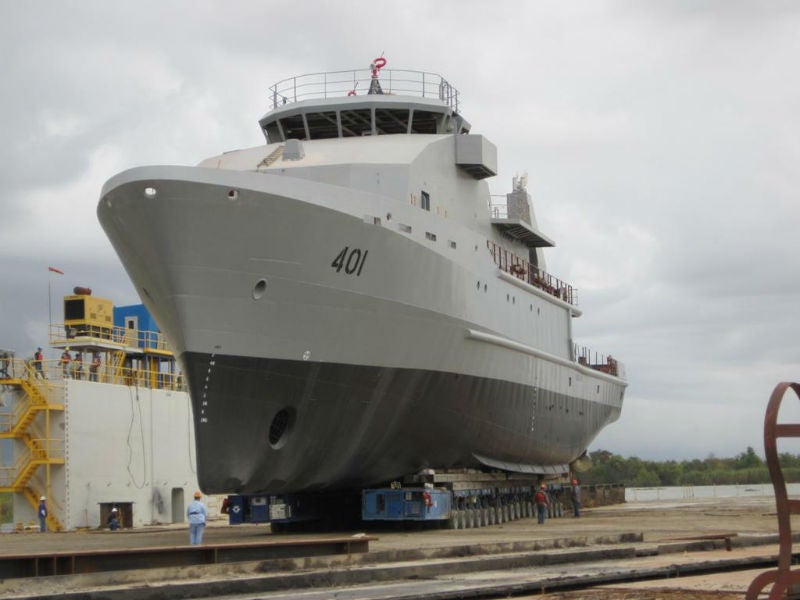
In its Fiscal Year 2020 defence budget, the US Navy has set aside $400m to research and develop two of the proposed ‘Ghost Fleet’ large unmanned surface vehicles (USVs), in an attempt to quickly field a new breed of armed surface combatants for use alongside manned operations.
While the US Navy currently deploys some smaller USVs for some activities, it is looking to buy ten larger corvette-sized unmanned ships that can use different types of sensors and, potentially, a new vertical launch system to fire guided missiles.
Go deeper with GlobalData


Discover B2B Marketing That Performs
Combine business intelligence and editorial excellence to reach engaged professionals across 36 leading media platforms.
“It will be smaller, potentially more cost-imposing and more attritable than conventional ships – in addition to being more affordable,” said US Navy deputy assistant secretary for budget rear admiral Randy Crites.
“We procure ten large USVs, that’s two per year…These are currently funded as they’re laid in now, through research and development, however we expect to transition this programme to ship construction at some point later in the FDIP [financial data in procurement] as we further develop the capability of command, control, and the concepts of operations through fleet demonstration.”
Crites noted that the US Navy has already invested in nine Lockheed Martin Orca extra-large unmanned undersea vehicles (XLUUV), which it is developing in areas such as “payload integration, military utility assessment, as well as vehicle employment to accelerate solutions for emerging fleet requirements.”
The deputy assistant secretary told reporters that while the specific hull form of the new Ghost Fleet is unknown, initial test articles weighed in at 2,000t and were around 200ft to 300ft in length, much larger than smaller USVs currently being experimented with, such as DARPA’s Sea Hunter vessel.
According to USNI News, chief of naval operations admiral John Richardson said he hoped for swift progress on the Ghost Fleet, comparing it to the aggressive push for the navy’s MQ-25 Stingray unmanned aircraft, which has been fast-tracked for operational use by the early or mid-2020s.
The Ghost Fleet is an important development for the US Navy, especially at a time when Russia and China are developing advanced naval and military capabilities.
Richardson added: “The overall benefits are that you can certainly reduce cost of the platform because you don’t have to support and protect people. You can also change the risk equation because you don’t have human life involved. By virtue of that you can potentially build more of them.”
After the completion of the development phase, the US Navy said it will buy two Ghost Fleet USVs per year until 2024, spending around $2.7bn in total.


