

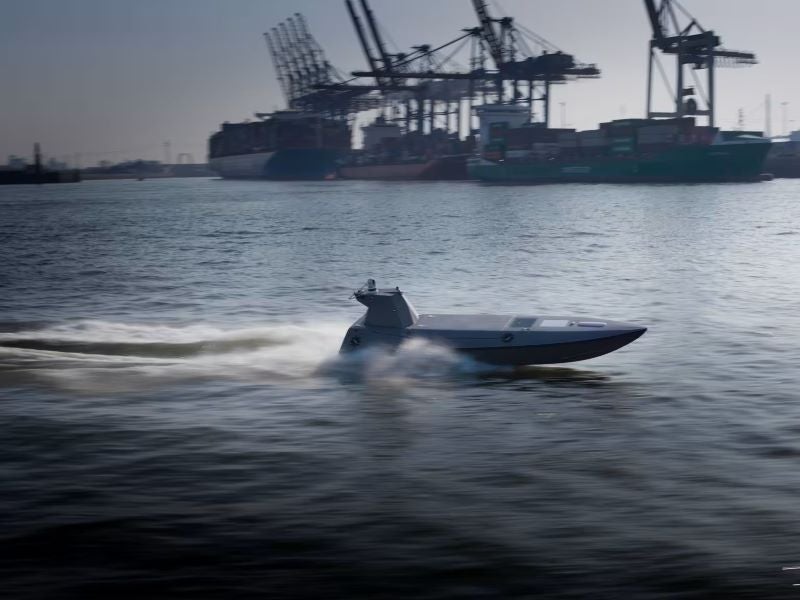
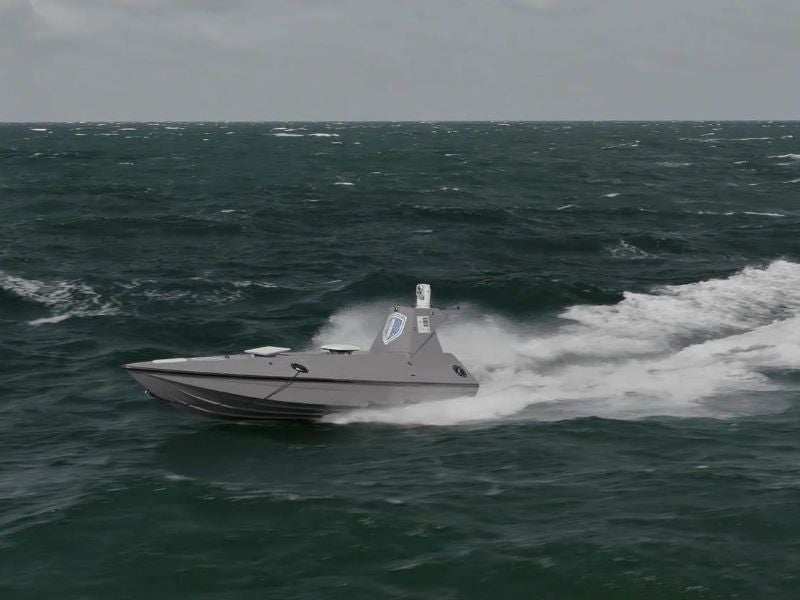
The K3 Scout is an uncrewed surface vessel (USV) jointly developed by Germany-based Rheinmetall Naval Systems and UK-based technology company Kraken Technology Group under the joint venture Rheinmetall Kraken.
Serial production began in April 2026 at Blohm+Voss, Rheinmetall’s shipyard in Hamburg, which the company is seeking to develop as a German test and technology hub for unmanned and autonomous maritime systems.
Recommended Buyers Guides

Initial output is planned at around 200 units per year, with the option to increase production to as many as 1,000 units annually if demand warrants.
The K3 Scout USV was presented at Eurosatory 2026 in June 2026. Based on the configuration, the platform can be used for maritime domain awareness, safeguarding vital infrastructure or serving as an armed platform to support military missions.
K3 Scout design and features
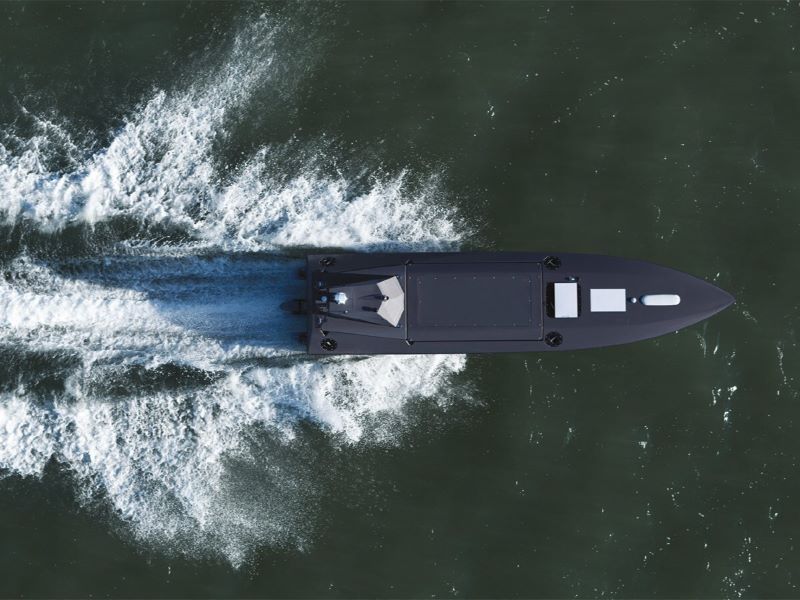
The K3 Scout measures 8.4m (27.5ft) in length with a 1.93m beam and a draught of 0.8m. It has a maximum displacement of 2,500kg (5,511.5lb) and a payload capacity of 600kg.
The USV has a modular design with a composite structure, standardised components and modular systems aimed at simplifying maintenance and sustainment.
The platform is transportable by air, land and sea with limited preparation, and is designed to establish connectivity and enter mission mode quickly. It is also intended to support rapid deployment across different maritime environments, with automated launch and recovery enabling operations from shore-based and sea-based platforms.
The vessel uses a reduced-signature design and an open architecture to allow third-party systems to be added without redesigning the platform. Modular payload bays accommodate mission sensor packages for intelligence, surveillance, target acquisition and reconnaissance, as well as kinetic and non-kinetic effects.
Control and sensors
The K3 Scout platform supports autonomous missions and remote operations and runs on the Auterion operating system, using open interfaces for autonomy integration. Operating modes range from supervised autonomy to remote piloting.
The vessel is designed to connect with legacy command and control systems, communications networks and partner payloads.
Integrated sensor data and onboard analytics provide continuous situational awareness, while encrypted communications deliver decision-ready intelligence to commanders with minimal delay. A human-on-the-loop approach maintains governance and oversight, and autonomous navigation handles course keeping, collision prevention and execution of assigned tasks.
Optional sensors include electro-optical, radar and sonar, alongside an optional user-defined command, control, communications, computers, cyber, intelligence, surveillance and reconnaissance (C5ISR) fit and an optional pilot module.
Propulsion and performance
For propulsion, the K3 Scout uses an inboard diesel powertrain with stern drive. It is stated to reach 55 knots, with a range of 650 nautical miles at 25 knots.
The USV has an endurance of up to 30 days, depending on the mission profile.
K3 Scout mission capabilities
The K3 Scout is suitable for anti-surface warfare including maritime strike and forward screening. In littoral environments, it is intended to support infiltration and extraction, resupply, casualty evacuation and strike tasks.
The USV is also positioned for littoral command, control, communications, computers, intelligence, surveillance and reconnaissance (C4ISR) capabilities as well as for delivering cyber and electromagnetic activities with offensive and defensive electronic warfare, off-board kinetic and non-kinetic options, and counter-uncrewed aerial system detection and defeat.
For attack missions, the platform is intended to be used within a teamed, multi-axis concept.
The vessel can operate alone or as part of a distributed fleet, increasing presence at sea without increasing exposure for crewed platforms.
Military trials
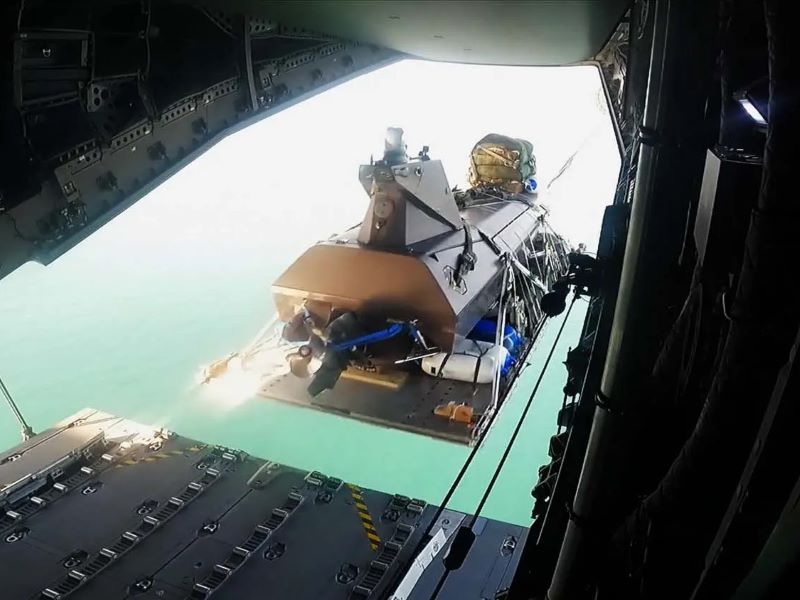
In July 2026, Kraken Technology Group and Capewell, supported by the Royal Navy through Project Beehive, reported what they described as the world’s first extracted-load airdrop of a USV from an A400M military transport aircraft.
During trials, a Project Beehive specification K3 Scout was delivered using Capewell’s Universal Maritime Craft Aerial Delivery System, with multiple drops from 1,300ft into waters up to Sea State 4.
The activity combined an optional airdrop kit for the K3 Scout with Capewell’s reconfigurable Type V parachute-based system. It concluded with validation of an IN-Release electro-mechanical mechanism intended to provide synchronised load separation across aerial and maritime applications.
