

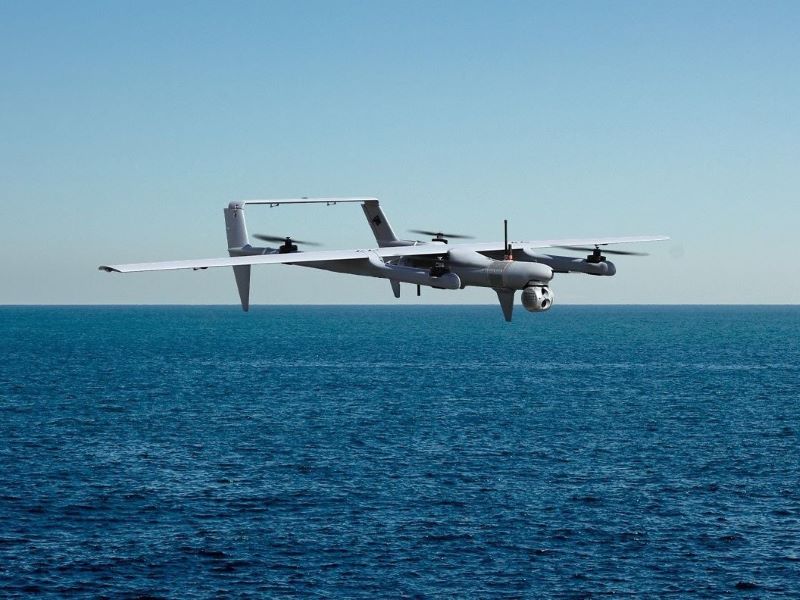
Airbus’ Aliaca VTOL is a compact tactical uncrewed aircraft system (UAS) intended to bolster intelligence, surveillance and reconnaissance (ISR) missions.
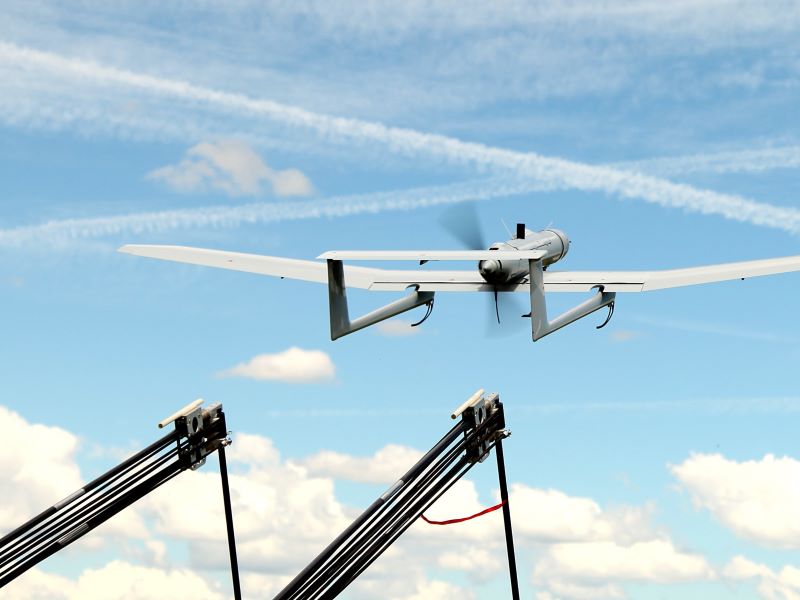
Classed as a Category 2 UAS, Aliaca is offered in both a fixed-wing format using catapult launch with automatic net recovery, and a vertical take-off and landing (VTOL) configuration. This combination is designed to provide flexibility for surveillance tasks over land and at sea.
Recommended Buyers Guides

The system has been qualified by France’s defence procurement agency, the Direction générale de l’armement (DGA), under the Sytèmes de mini drones pour la Marine (SMDM) programme.
The SMDM currently equips patrol vessels including Patrouilleur Hauturier – high-sea patrol vessels, Patrouilleurs Outre-mer overseas patrol vessels and surveillance frigates.
The Aliaca fixed-wing platform has been in service with the French Navy since 2022, with a total of 34 systems commissioned.
The Aliaca VTOL variant was unveiled in April 2025 and was developed in less than a year by drawing on an earlier model already proven in French Navy operations. Testing on the variant
took place ashore and at sea from late 2024 and continued through 2025.
France’s DGA ordered the Aliaca VTOL variant under the SMDM contract in February 2026, with Airbus Helicopters contracted via its Survey Copter subsidiary.
The updated SMDM VTOL configuration is due to begin a DGA qualification phase in early 2026, covering both land and sea trials.
Following the qualification, initial deliveries are planned from May 2026. The French Navy will become the first operator of the VTOL variant.
The fixed-wing SMDM system will remain in service on equipped ships and is expected to be supported for at least seven years.
Aliaca VTOL design and features
The Aliaca VTOL measures 2.1m (6.88ft) in length with a wingspan of 3.5m. The UAS design uses four lift propellers to enable VTOL while retaining fixed-wing flight for the mission.
The VTOL platform is available in two variants, the Aliaca VTOL Evo and Aliaca VTOL ER, both designed for rapid deployment with a reduced logistical footprint.
Both variants have a maximum take-off weight of less than 25kg (55lb) and can be fielded in around 15 minutes.
The system is easy to use and requires minimal upkeep in the field, enabling rapid deployment in both daytime and nighttime conditions.
The UAS platform can also operate in restricted areas and function in environments where Global Navigation Satellite Systems are unavailable.
The system is easy to dismantle for transport and benefits from a common autopilot and ground station shared across the Aliaca family, supported by an intuitive user interface.
It is built to deliver dependable performance ashore and at sea while maintaining a low visual and acoustic profile, and is engineered to be robust, low-maintenance and easy to service.
Payload
The Aliaca VTOL’s modular architecture supports rapid payload changes. Payload capacity is up to 2kg on the Evo and up to 3kg on the ER, with provision for integrating different sensors depending on mission needs.
The payload suite includes a gyro-stabilised full HD electro-optical and infrared turret with 30x zoom and continuous 360° coverage, with the option to fit alternative payloads where required.
Propulsion and performance
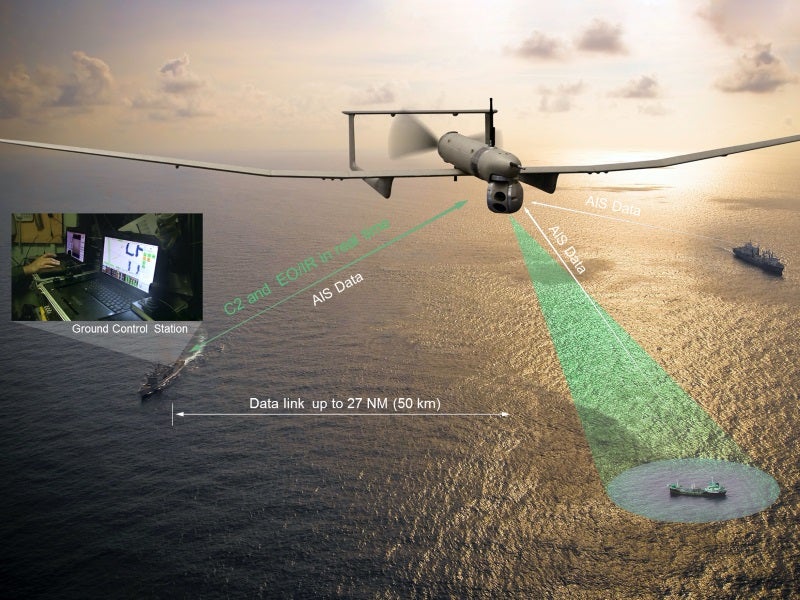
The Evo variant is an all-electric platform with endurance of up to three hours and a data link range of up to 50km.
The ER variant uses a hybrid electric and piston-engine arrangement to extend endurance to up to six hours and increase range to up to 80km. The engine is compatible with Jet A1, JP5 and JP8 fuels.
Safety features include an autonomous flight termination system, advanced geocaging and a transponder on the piston-engine variant.
Mission configurations
Mission endurance varies with the sensor and cargo fit. With an Automatic Identification System (AIS) installed, the Evo can remain airborne for roughly three hours, while the ER can operate for up to six hours.
When the AIS is paired with a 1kg payload, endurance falls to around two hours for the Evo and up to four hours for the ER.
With AIS and a 2kg payload, the Evo offers about two hours, compared with up to three hours for the ER.
Aliaca VTOL mission capabilities
The Aliaca UAS system is designed to expand a ship’s ability to conduct airborne surveillance for detection and identification tasks. It has been used to support maritime security and safety activities such as border and coastal monitoring, countering illegal activity at sea including smuggling, unlawful fishing and pollution response, as well as search and rescue.
The French Navy plans to use the VTOL version across additional vessel types for roles including tactical situational awareness, maritime and coastal monitoring, search and rescue, and the detection of suspicious activities. Over time, it is also expected to support coastal surveillance operations from shore bases.
