

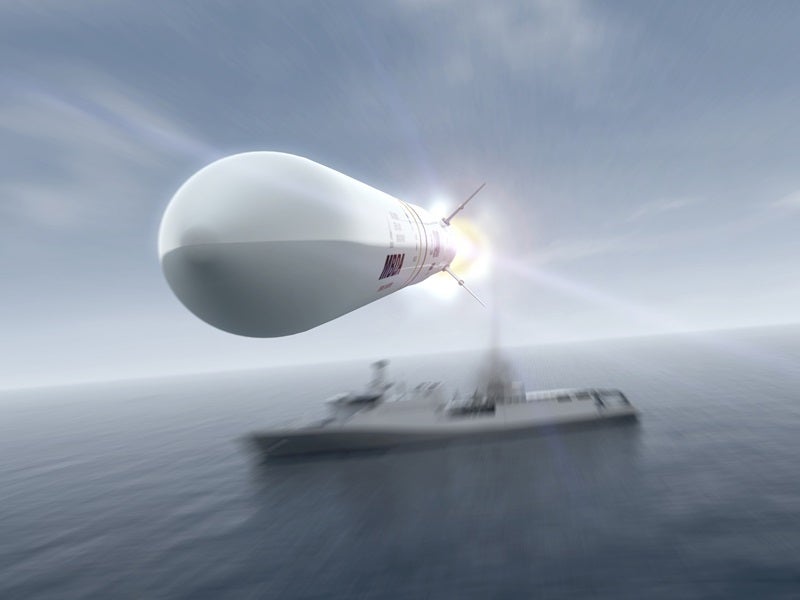
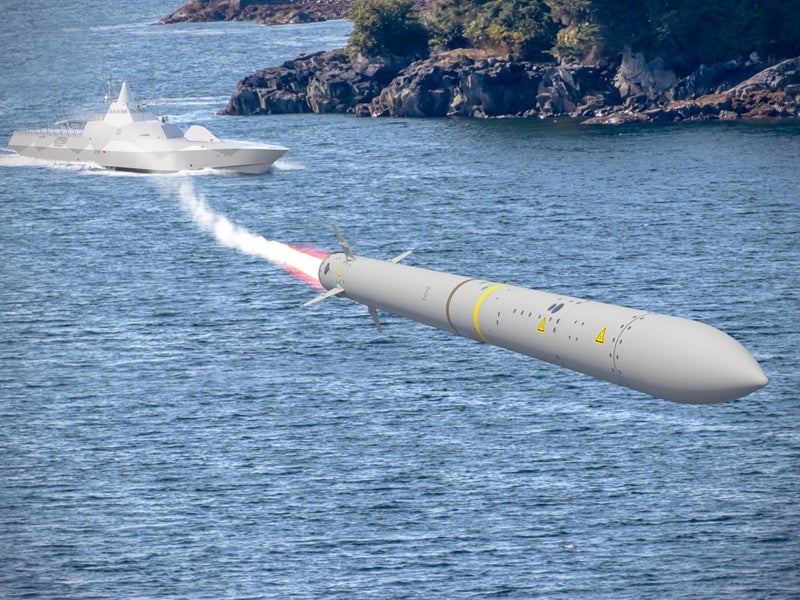
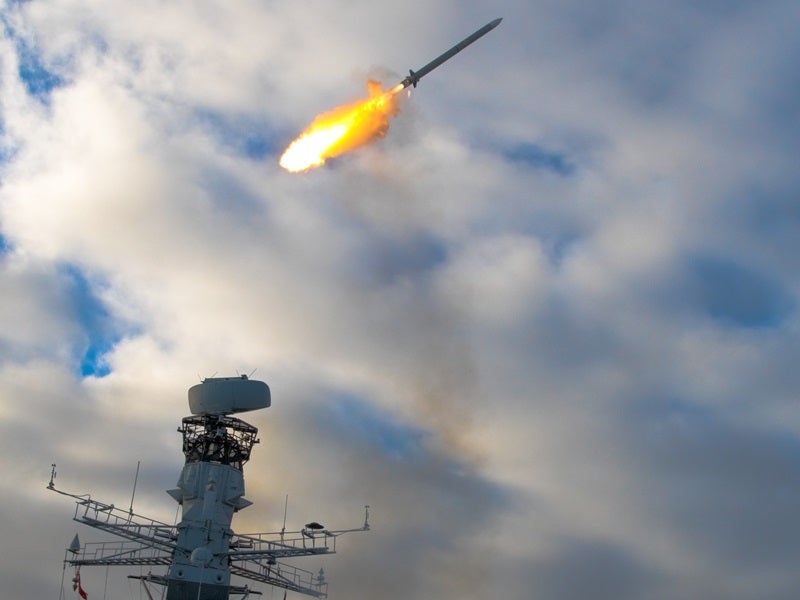
The Sea Ceptor is a sea-based supersonic missile defence system developed for the British Royal Navy.
The system, initially mounted on Type 23 frigates, is planned for subsequent use on Type 26 Global Combat Ships (GCS).
Recommended Buyers Guides

The Sea Ceptor missile system was developed by MBDA Missile Systems, a partnership between BAE Systems, EADS and Finmeccanica.
Thales UK develops and manufactures the laser proximity fuse for the Sea Ceptor’s missile as part of a contract signed in January 2012.
The British Navy completed firings of Sea Ceptor on HMS Argyll in September 2017, as part of the life extension of Type 23 class frigates. The Sea Ceptor firings on HMS Westminster were concluded in December 2017. The missile was also test-fired by the HMS Montrose.
The Sea Ceptor missile system entered service with the British Navy in May 2018.
In November 2025, MBDA agreed to an amendment to its existing agreement with the Swedish Defence Materiel Administration, covering additional deliveries of the common anti-air modular missile (CAMM).
The updated arrangement builds on an order placed in November 2023 for missiles to equip MBDA’s Sea Ceptor air defence system, which Sweden is fitting to its indigenous Visby‑class corvettes.
Sea Ceptor design and features
The supersonic Sea Ceptor missile measures 3.2m in length and weighs 99kg, with a diameter of 166cm. It offers all‑round engagement out to beyond 25km and is capable of reaching speeds of up to Mach 3.
The Sea Ceptor has a simple integration mechanism. It has a compact launch system that allows it to be deployed at various deck locations. The “soft launch” technique reduces the weight of the system and provides installation flexibility.
Its missile system does not require dedicated radars because it can utilise the data interpreted by the vessel’s surveillance radars. Its command and control system can be integrated with new and existing combat systems.
The system utilises MBDA’s CAMM, which is developed for deployment on both land and air and at sea and provides protection within ground-based and naval air defence environments.
CAMM details
The missile can intercept combat aircraft and missiles moving at supersonic speeds and neutralise them. It protects the host ship as well as the surrounding installations.
It can respond to saturating attacks with its multiple channels of fire. It can protect an area of 1,300km² over land and sea.
CAMM employs an active RF seeker that delivers strong performance in all weather, removing the requirement for dedicated, complex and costly fire-control or illumination radars.
The missile is lightweight and highly manoeuvrable, equipped with a powerful warhead and sophisticated fuzing that together provide a strong probability of defeating a broad spectrum of targets.
At sea, the weapon’s command-and-control architecture is intended for straightforward integration with both modern and legacy naval combat management systems. On land, the compact, low-mass design means launch vehicles can carry multiple rounds. The missile is intended to remain sealed within its canister and requires no maintenance throughout its service life.
Sea Ceptor orders and deliveries
MBDA won a £483m ($758m) demonstration contract for the Sea Ceptor from the Royal Navy in January 2012 under the future local area air defence system (FLAADS).
The contract is part of the portfolio management agreement (PMA), which the UK MoD signed with MBDA in 2010. Under the PMA, MBDA would manage the portfolio of complex weapon projects for the MoD for ten years.
MBDA secured a £250m ($403m) contract from the MOD for delivery of the Sea Ceptor air defence weapon system in September 2013.
In May 2014, MBDA received a contract from the New Zealand Ministry of Defence to supply Sea Ceptor for the Local Area Air Defence element of the Royal New Zealand Navy’s ANZAC Frigate Systems Upgrade (FSU) project.
The Brazilian Navy preferred Sea Ceptor to deliver local area air defence for its Tamandare class corvettes in November 2014.
In April 2016, the MOD awarded a £100m ($145m) contract to MBDA for the demonstration and manufacturing of Sea Ceptor missiles for integration on the Type 26 GCS. The ten-year contract also includes the manufacture of electronics equipment and delivery of support for the eight ships in the class.
MBDA received a £323m ($416m) contract in April 2017 for the next batch of Land Ceptor and Sea Ceptor air-defence missiles for use by both the British Navy and Army.
In May 2021, the UK Ministry of Defence signed a contract for the supply of Ceptor systems to protect the new Type 31 frigates of the Royal Navy, including system integration, delivery and installation of ship hardware for the Type 31 programme.
The Brazilian Navy contracted MBDA in June 2021 for the supply of Sea Ceptor missile systems for the Navy’s Tamandare-class frigates.
The Polish Navy placed an order in January 2024 to equip three of the Polish Navy’s Miecznik-class frigates with the Sea Ceptor defence system.
