

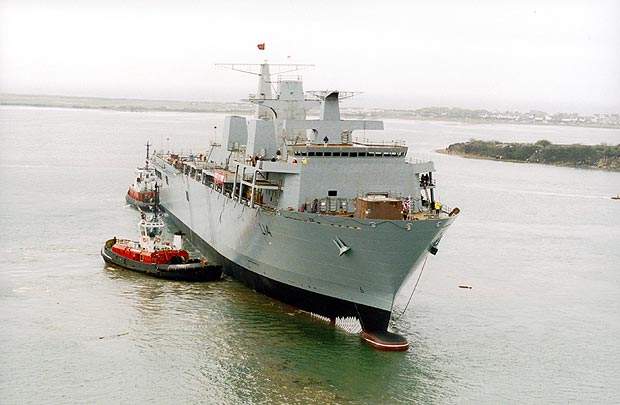
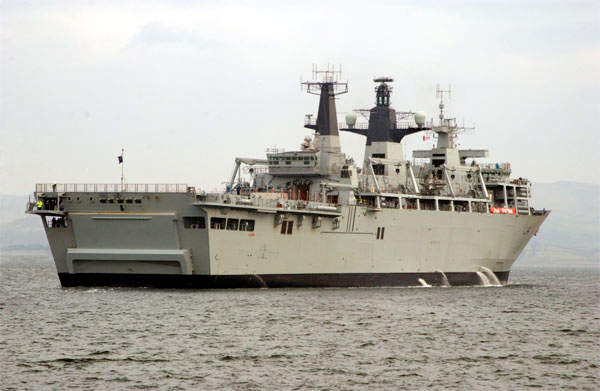

On 18 July 1996, the UK Ministry of Defence announced a £450m order with Vicker’s Shipbuilding and Engineering, now BAE Systems Marine, for two landing platform docks (LPDs) for the Royal Navy.

Recommended Buyers Guides

HMS Albion (L14) and HMS Bulwark (L15)
The two ships are named HMS Albion (L14) and HMS Bulwark (L15) and were built at BAE Systems Marine dockyard at Barrow-in-Furness, Cumbria. HMS Albion was launched in March 2001, commissioned in June 2003 and declared fully operational in April 2004. HMS Bulwark was launched in November 2001 and entered service in December 2004.
The two ships are based at Devonport with the helicopter carrier, HMS Ocean. The LPDs replace HMS Fearless, which retired from service in March 2002, and HMS Intrepid which was decommissioned several years ago.
In July 2006, HMS Bulwark supported operations in the evacuation of UK nationals from Beirut during the conflict involving Israel and the Lebanon. HMS Bulwark evacuated about 1,300 people in one day as part of the Royal Navy Operation Highbrow.
In May 2010, HMS Bulwark entered the drydock at HM Naval Base Devonport for a £30m refit. The warship’s machinery and magazine spaces, propulsion system, sensors, IT network, aviation facilities and weapon systems were upgraded by the prime contractor Babcock. The ship returned to service in March 2011.
Albion Class landing platform dock design
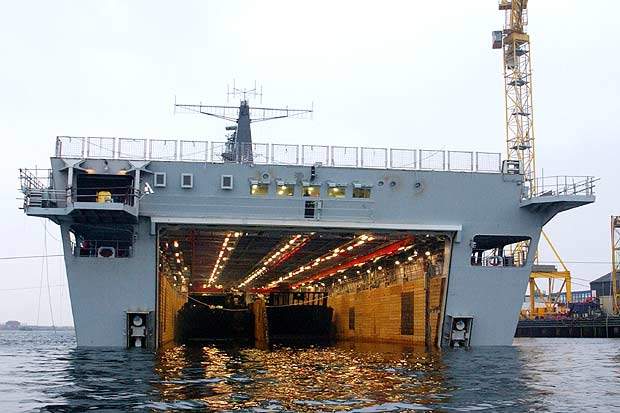
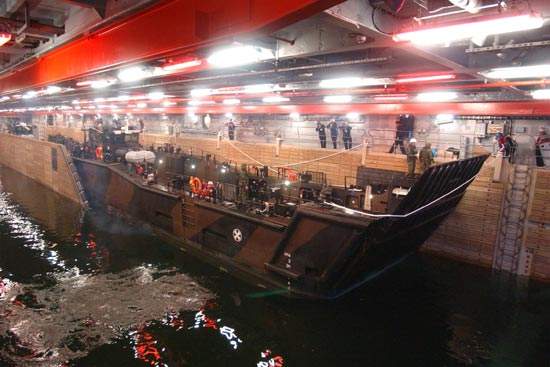
Each landing platform dock can operate eight landing craft, four of which can transport and land main battle tanks. The docking system is located at the stern of the ship.
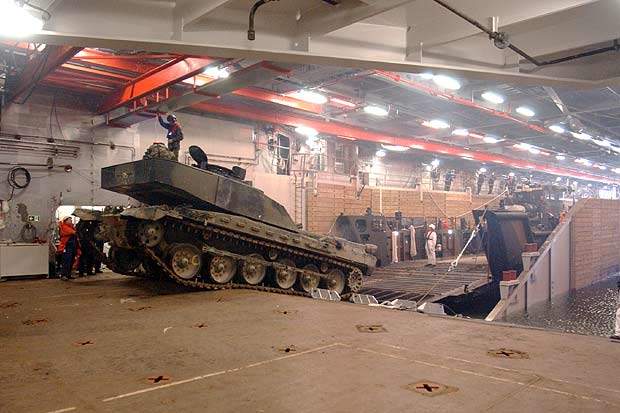
Flooding of the docking area is achieved by ballasting the stern of the ship, allowing the landing craft to float. The LPD is equipped with a new design of roll-on, roll-off landing craft, the LCU mk10, which means that land vehicles are forward facing for disembarking. The LCU has a deep load displacement of 240t and can carry a combat-ready Challenger mk2 MBT and land it within its fording depth.
The ship also has four LCVP mk5 landing craft from FBM Babcock Marine, each of which can transport 35 men or two light trucks. The smaller LCVPs are carried on davits. When the ship is berthed, vehicles can also disembark through the side ports.
Each LPD has a complement of 325 crew, including crew for the landing craft. The ship can carry 300 assault troops or up to 650 for short emergency periods, together with their equipment and 70 support vehicles.
The flight deck has two helicopter landing sites which can accommodate either one Chinook or two medium support helicopters, such as the Sea King mk4 or EH101 helicopters.
The standard displacement (fully manned and stored) is 13,000t, and the full-load displacement (with fuel, ammunition, stores, water) is 16,000t.
Command system
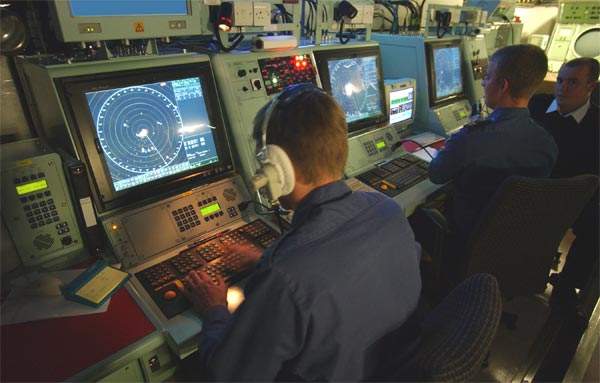
The command, control and communications systems include: BAE Systems ADAWS 2000 combat data system, CSS command support system, integrated communications system and the Astrium (formerly Matra Marconi) Scot satellite communication system. ADAWS 2000 is being upgrade with link 16, for anti-air warfare control and aircraft direction, and a new IFF (interrogation friend or foe) tracking capability.
The Royal Navy’s CSS command support system, supplied by EDS Defence, is being fitted throughout the Royal Navy fleet and also in some operational land-based headquarters. The LPD command support system fit comprises 72 workstations for the naval task group and for the amphibious landing force command. The software is Windows based and the system design is based on commercial-off-the-shelf hardware.
The integrated communications system for the LPD is supplied by a consortium of Redifon, BAE Systems and Thales (formerly Thomson CSF). The system is the first fully integrated communications system for the Royal Navy. The system integrates secure voice and data communications, both internally and externally to the ship, incorporating satellite, high-frequency radio and a range of internal communication networks.
Albion Class LPD weapon systems
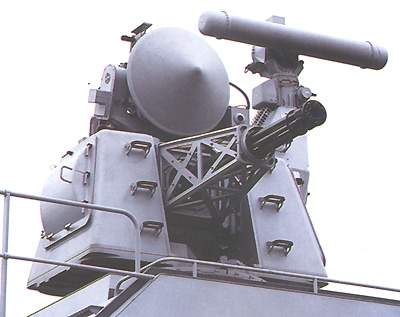
The ship is equipped with two twin 30mm guns and two Goalkeeper close-in weapon systems from Thales Nederland (formerly Signaal). The countermeasures suite includes the Outfit DLJ decoys, eight Sea Gnat launchers and BAE Systems DLH offboard decoy. The electronic support measures / countermeasures system is the UAT(1) from Thales Defence, which is also installed on the newer versions of the Royal Navy’s Type 23 frigates.
Sensors
Two Kelvin Hughes Type 1007/8 I-band radars provide the navigation and aircraft control radar. The air / surface search radar is the Selex Sensors and Airborne Systems Type 996 E/F band.
This is being replaced by the Royal Navy’s new-generation maritime medium-range radar (MRR). In August 2008, BAE Systems Insyte (with Qinetiq) ARTISAN 3D E/F-band radar was selected for the MRR. The radar will be retrofitted to Albion and Bulwark between 2011 and 2015.
Propulsion
The diesel-electric propulsion system comprises two Wartsila Vasa 16V 32E diesel generators, two Wartsila Vasa 4R 32E diesel generators, two shafts, two slow-speed electric motors and a bow thruster. The top speed is 18kt.
The Global Naval Surface Combatants and Warfare Systems Market 2011-2021
This project forms part of our recent analysis and forecasts of the global naval surface combatants and warfare systems market available from our business information platform Strategic Defence Intelligence. For more information click here or contact us: EMEA: +44 20 7936 6783; Americas: +1 415 439 4914; Asia Pacific: +61 2 9947 9709 or via email.
