

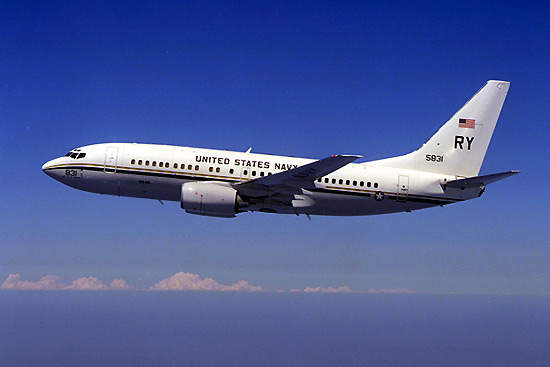
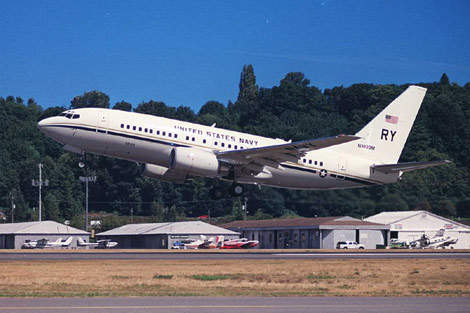
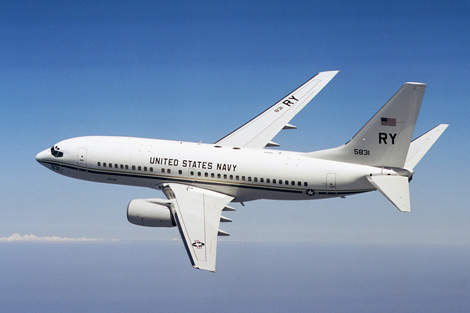
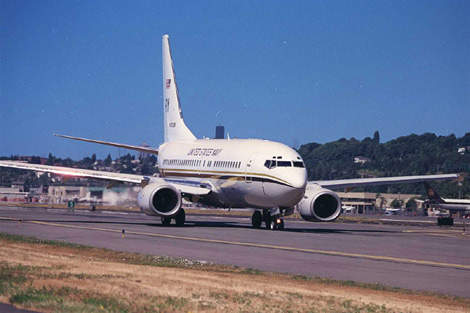
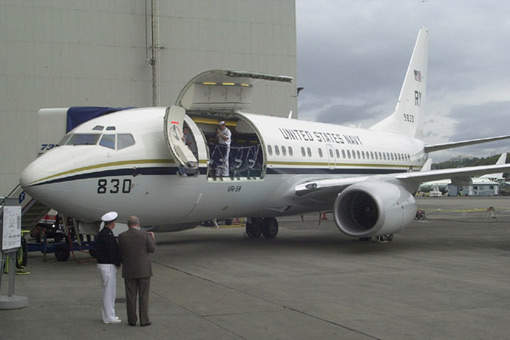
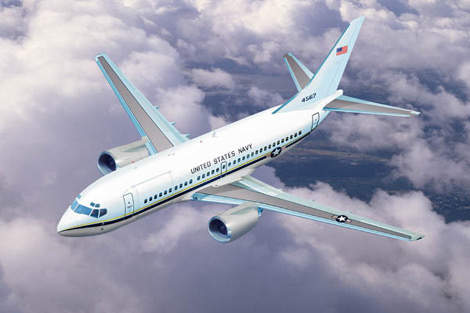
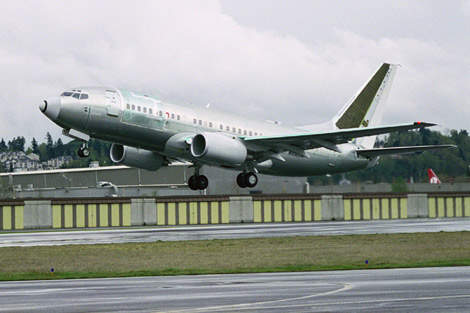
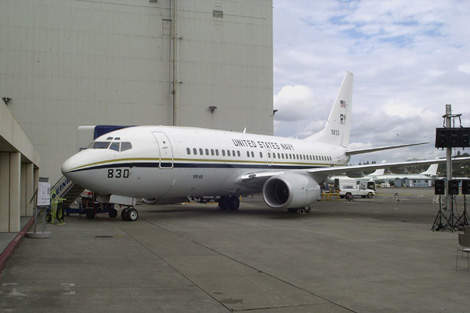
The US Navy has ordered 11 C-40A Clipper aircraft under the navy unique fleet essential airlift replacement aircraft (NUFEA-RA) programme. The aircraft are to replace the Naval Reserve fleet of C-9B Skytrain aircraft which is approaching the end of operational life.
The C-40A is the first new logistics aircraft in 17 years to join the US Naval Reserve.
Recommended Buyers Guides

The Naval Reserve provides all the US Navy’s worldwide in-theatre medium and heavy airlift requirements. Compared to the Skytrain, the Clipper has higher fuel efficiency, increased range and payload capabilities and meets or exceeds the requirements of international noise and environmental standards.
The C-40A is a variant of the Boeing next-generation 737-700C civil aircraft which is an increased gross weight, midsize version of the 737 family of twin jet airliners. The first flight of the aircraft took place in April 2000. The first of the C-40A aircraft entered service with the United States Naval Reserve Fleet Support Squadron in April 2001. The ninth was delivered in June 2006. The US Navy placed an order for two additional aircraft in December 2008, for delivery by February 2011. The first aircraft was delivered in November 2010 and second in January 2011. The USN has a requirement for up to 20 additional aircraft.
In June 2010, the US Navy placed a C-40A contractor logistics support (CLS) order with Boeing. The five-year contract is valued at $80.9m.
The aircraft are certified to operate in three configurations – all-passenger (121 passengers), all-cargo (up to eight pallets) or combination (‘combi’) configuration that will accommodate up to three cargo pallets and 70 passengers on the main deck. The US Naval Reserve will staff and operate the aircraft.
The navy has used standard commercial practices to purchase the aircraft. The aircraft are stationed at Naval Air Station Carswell Joint Reserve Base, Fort Worth, Texas, and the Reserve Fleet Logistics Support Squadron 58, based at Naval Air Station Jacksonville, Florida.
The Boeing management team for the programme is led by Boeing Derivative Airplane Programmes in Seattle. The manufacturing of the fuselage is carried out at the Boeing production facility in Wichita, Kansas, prior to the build-up and assembly of the aircraft in Renton, Washington. The aircraft then proceeds to flight testing in Seattle and, finally, to the combi modifications and certification in Wichita.
The Naval Reserve provides the line maintenance on the aircraft. For the first three years of service, an industrial partnership between Boeing and Delta Air Lines, provided the interim contractor logistics support, providing fleet management, spares management and heavy maintenance.
Design
The aircraft, based on a civil airline design, is suitable for deployment to civil airports or military air bases. It has an aluminium alloy fail-safe fuselage and wing structure and incorporates the strengthened wing design as used on the 737-800 and
Boeing Business Jet.
The undercarriage of the aircraft has been strengthened to accommodate the increased gross weight. The hydraulically retractable tricycle-type landing gear is fitted with Boeing shock absorbers and Honeywell or Goodrich brakes.
Flight deck
The two-crew flight deck of the Clipper retains the features of the glass cockpit installed in the commercial 737-700 aircraft with a Honeywell common display system and five flat panel liquid crystal display screens.
Systems include a dual flight management system and an integrated global positioning system.
Cabin
In an all-passenger configuration, the cabin accommodates 121 passengers. Alternatively the cabin can be fitted in an all-cargo or combination configuration that will accommodate up to three cargo pallets and 70 passengers on the main deck. The cabin has a strengthened floor and cargo handling systems.
The forward cargo door, measuring 11ft wide by 7ft high and installed on the port side of the main deck, is the most prominent modification to the C-40A Clipper variant of the 737 family. The exceptionally large door allows very fast and easy loading and unloading and fast turnaround at airports.
The aircraft has two baggage holds under the floor of the main cabin with a total capacity of 28.4m³.
The aircraft has an air cycle environmental control system and digital cabin pressure control.
Engines
The two podded engines, CFM International CFM56-7B24, each rated at over 101kN, are wing mounted. The engine nacelles are of fibre-reinforced plastic and graphite-Kevlar-glass-fibre composite construction.
The aircraft has a Honeywell 131-9B auxiliary power unit with engine air start capability.
The Global Military Aircraft Market 2011-2021
This project forms part of our recent analysis and forecasts of the global military aircraft market available from our business information platform Strategic Defence Intelligence. For more information click here or contact us: EMEA: +44 20 7936 6783; Americas: +1 415 439 4914; Asia Pacific: +61 2 9947 9709 or via email.
