

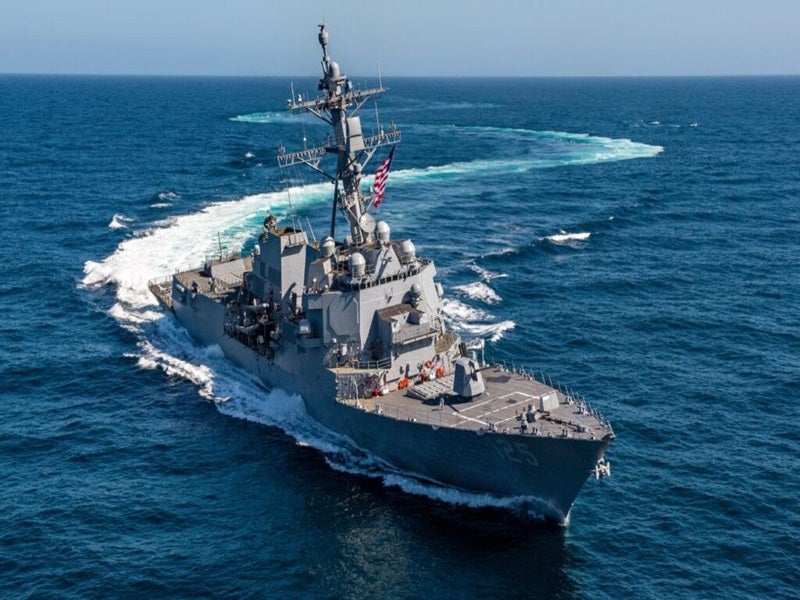
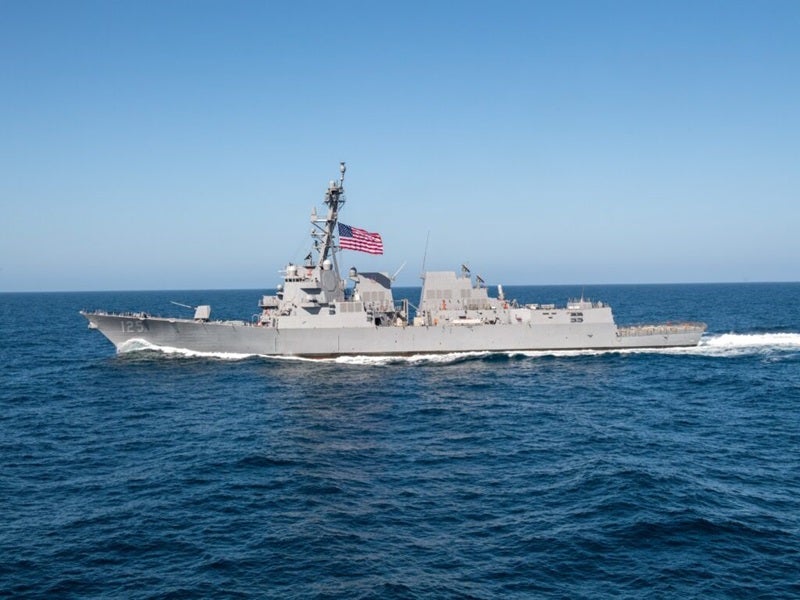
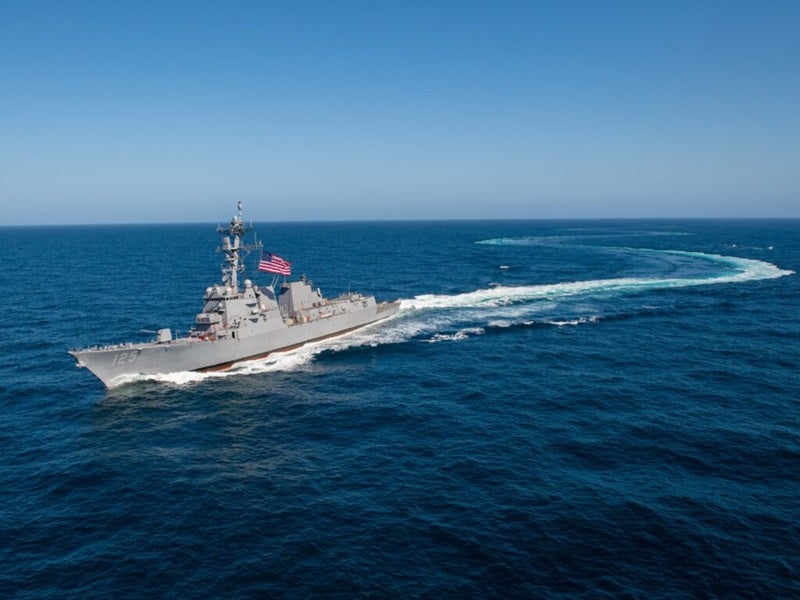
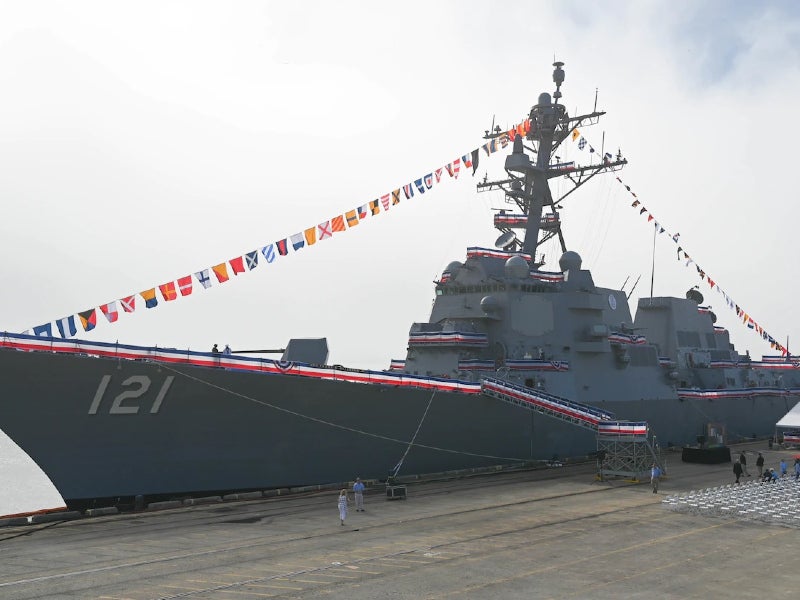
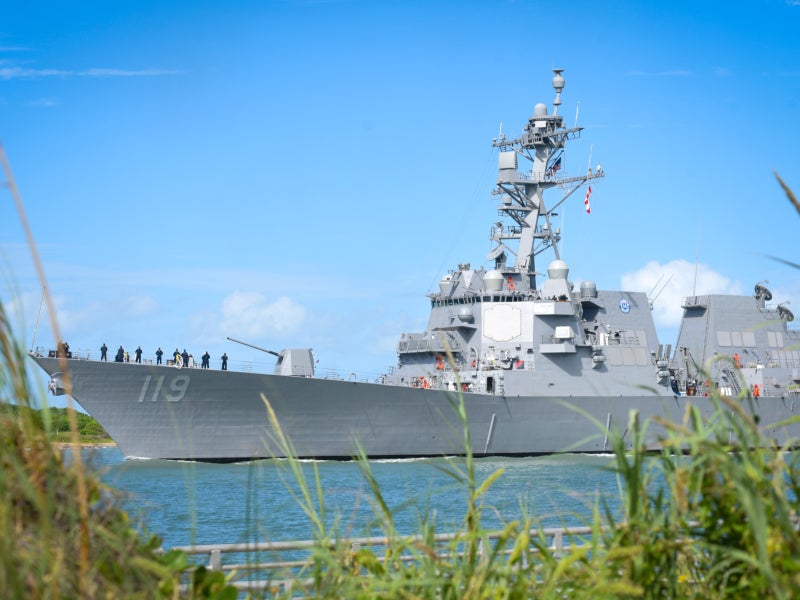
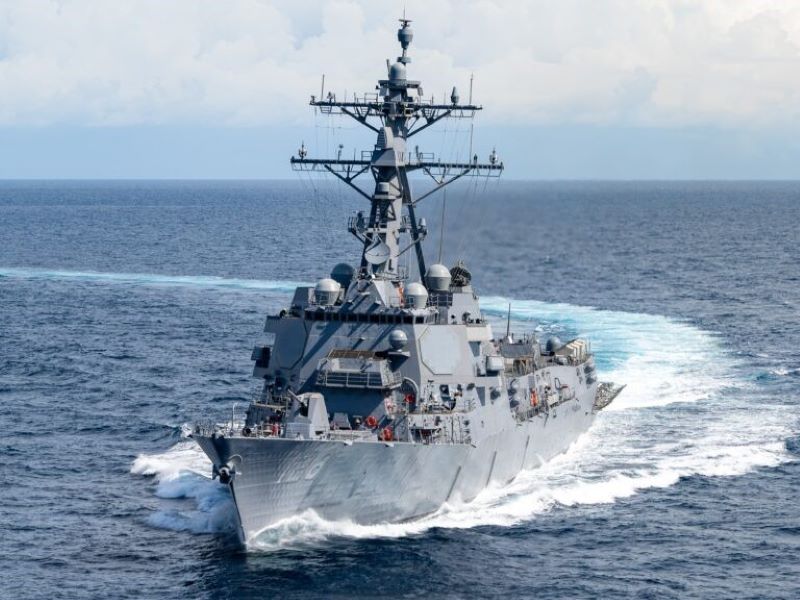
The Arleigh Burke-class guided-missile destroyers, or DDG 51-class, were developed for the US Navy to provide multi-mission offensive and defensive capabilities.
The destroyers entered service as the successors to the Charles F. Adams class (DDG 2).
Recommended Buyers Guides

They are produced in four distinct variants, known as Flights. DDG 51–DDG 71 form the original Flight I design, followed by Flight II vessels numbered DDG 72–DDG 78.
Flight IIA covers DDG 79–DDG 124, as well as DDG 127. The Flight III configuration starts with DDG 125 and continues to DDG-149.
The contracts for the first 28 destroyers were awarded to Northrop Grumman’s subsidiary, Northrop Grumman Ship Systems (formerly Litton Ingalls Shipbuilding). The remaining 34 ships were built by General Dynamics’ subsidiary Bath Iron Works (BIW).
The USS Arleigh Burke, the first warship in the class, was commissioned by the US Navy in July 1991.
Arleigh Burke-class destroyers deployed for Operation Epic Fury
In April 2026, the US Central Command (CENTCOM) announced that the Arleigh Burke-class destroyers the USS Frank E. Peterson (DDG 121) and USS Michael Murphy (DDG 112) have been deployed in the Strait of Hormuz, located between Oman and Iran, as part of Operation Epic Fury launched against Iran.
Operation Epic Fury is a military operation launched in February 2026 by the US, along with Israel, to degrade Iran’s military infrastructure. In retaliation, Iran blocked the Strait of Hormuz, which serves as a key international maritime route.
The destroyers are part of a wider effort aimed at confirming that the waterway is completely free of sea mines reportedly placed earlier by Iran’s Islamic Revolutionary Guard Corps. In the days ahead, the US will deploy further assets including subsea drones to support the ongoing mine clearance operation.
The operation aims to implement a blockade on vessels entering and exiting Iranian ports, while ensuring the free movement of vessels transiting the Strait of Hormuz to and from non-Iranian ports.
CENTCOM confirmed on 15 April 2026 that the blockade was completely implemented.
Arleigh Burke-class design and features
The Arleigh Burke class destroyers were built around a new hull design while drawing on the Spruance class (DD 963) propulsion and machinery arrangement. They also adopted the Aegis Weapon System, which had already been demonstrated on the Kidd class (DD 993) and deployed on the larger Ticonderoga-class cruisers.
The Arleigh Burke-class destroyers have a length of 505ft, a beam of 66ft, a draft of 36ft and a height of 153ft. The vessels have a displacement of 8,558t.
Except for the two aluminium funnels, the entire ship is made from steel, with vital areas protected by two layers of steel and 70t of Kevlar armour.
The destroyer has a platform for rearming and refuelling a LAMPS III SH-60B/F helicopter with anti-submarine warfare capabilities, but the ship cannot accommodate a helicopter of its own without hangars. This is the first US Navy class to be fitted out with anti-nuclear, biological and chemical warfare protection.
Details of Arleigh Burke-class Flight I and Flight II ships
The Flight I and II ships were delivered between 1994 and 1999.
The Flight I configuration ships include the USS Arleigh Burke (DDG 51), USS Barry (DDG 52), USS John Paul Jones (DDG 53), Curtis Wilbur (DDG 54) and USS Stout (DDG 55).
The ships that are part of the Flight II configuration include the USS Mahan (DDG 72), USS Decatur (DDG 73), USS McFaul (DDG 74), USS Donald Cook (DDG 75) and USS Higgins (DDG 76).
Details of Arleigh Burke-class Flight IIA ships
In April 2018, the US Navy unveiled plans to modernise the existing destroyers to extend their service by an additional ten years, increasing the projected ship service life from 35 or 40 years to 45 years.
A second phase of the DDG modernisation programme is in progress, delivering a comprehensive mid-life upgrade for the Flight IIA Arleigh Burke-class destroyers and helping the DDG 51 fleet retain operational relevance.
Elements of the upgrade are also being incorporated into newly built ships, raising the core capability of the latest hulls while improving commonality between newbuilds and modernised vessels already in service. The goal is to cut crew workload, strengthen warfighting performance and lower the US Navy’s overall life cycle costs.
A total of 45 ship upgrades have either been completed or are under way under the first phase, with a further 15 planned within the Future Years Defence Programme.
The Arleigh Burke-class vessels in the Flight IIA configuration include the USS Oscar Austin (DDG 79), USS Roosevelt (DDG 80), USS Winston S. Churchill (DDG 81), USS Lassen (DDG 82) and USS Howard.
Additional ships include the USS Gridley (DDG 101), USS Sampson (DDG 102), USS Truxtun (DDG 103), USS Sterett (DDG 104) and USS Dewey (DDG 105.
The US Navy awarded a contract to General Dynamics for the construction of the USS Harvey C Barnum Jr (DDG 124), the last ship in the Flight IIA configuration, in March 2016. The first steel for DDG 124 was cut in May 2018, keel-laying took place in April 2021 and the ship was commissioned in April 2026.
In April 2026, the US Navy awarded a $183.22m contract to General Dynamics for the maintenance, modernisation and repair of the USS Truxtun.
Flight III Arleigh Burke ships
Flight III Arleigh Burke-class combat warships include the USS Jack H-Lucas (DDG 125), USS Louis H Wilson Jr (DDG 126), USS Gallagher (DDG 127), USS Ted Stevens (DDG 128) and USS Jeremiah Denton (DDG 129).
The DDG 51 Flight III modernisation focuses on the AN SPY-6(V)1 Air and Missile Defence Radar, which delivers a major performance upgrade compared with the Flight IIA variants. This radar allows Flight III destroyers to conduct anti-air warfare and ballistic missile defence at the same time.
Improvements over previous flights include hangars for two SH-60B/F LAMPS helicopters, new combat system software, an enlarged flight deck, the Evolved SeaSparrow missile and the Kingfisher mine detection sonar.
Timken secured a contract from the US Department of Defense to supply Philadelphia Gear main reduction gears for the next generation of Arleigh Burke DDG 51-class ships in February 2016.
In August 2023, HII Ingalls Shipbuilding and BIW were awarded contracts to construct nine Arleigh Burke-class Flight III guided-missile destroyers.
Ingalls Shipbuilding will construct six of the nine destroyers from 2023 to 2027, while BIW will build the remaining three.
The keel of the Arleigh Burke-class guided missile destroyer the USS Sam Nunn (DDG 133), the fifth Flight III destroyer built at Ingalls, was authenticated in November 2024.
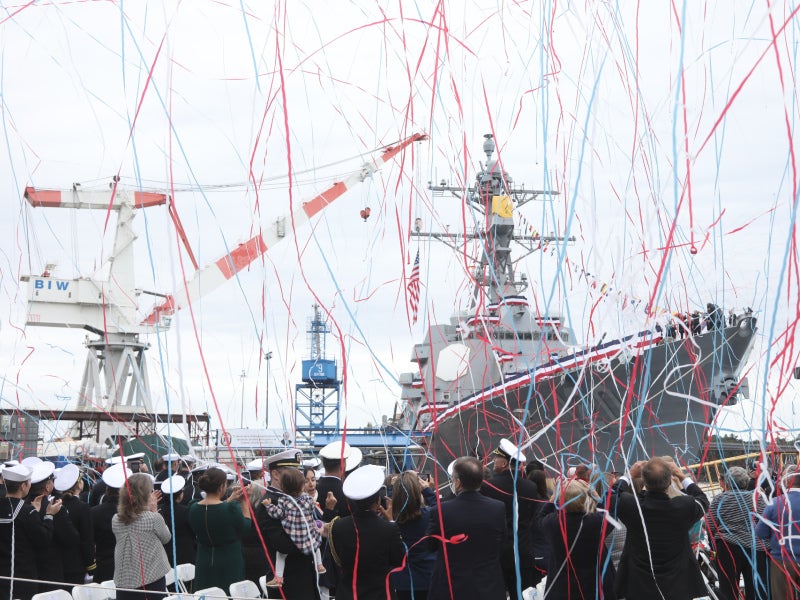
The USS Jeremiah Denton (DDG 129) was launched in March 2025, marking the third Flight III Arleigh Burke-class destroyer constructed at the Ingalls Shipbuilding yard.
Ingalls Shipbuilding announced the keel laying for the USS Thad Cochran (DDG 135) in October 2025.
Ingalls handed over the Arleigh Burke-class guided missile destroyer the Ted Stevens (DDG 128) to the US Navy in December 2025. It is the second Flight III destroyer of the class delivered by the yard.
In April 2026, Ingalls Shipbuilding launched the USS George M. Neal (DDG 131).
Details of the Aegis combat system
Arleigh Burke-class destroyers are equipped with the Aegis combat system, which integrates the ship’s sensors and weapon systems to engage anti-ship missile threats.
The Aegis system features a federated architecture with four subsystems, including an AN/SPY-1 multifunction radar, a command and decision system (CDS), an Aegis display system and the weapon control system (WCS).
The CDS receives data from ship and external sensors through satellite communications and provides command, control and threat assessment. The WCS receives engagement instruction from the CDS, selects weapons and interfaces with the weapon fire control systems.
The Aegis upgrade, Baseline 7.1, was certified by the US Navy in September 2005 on board the USS Pinkney (DDG 91). The upgrade includes a new radar, AN/SPY-1D (V), which features enhanced electronic countermeasures and improved capability in littoral environments.
The USS John Finn (DDG 113) was the first new-build to be equipped with Baseline 9. The combat systems upgrade in 2015 involved the activation of the Aegis Baseline 9 in the Arleigh Burke, the lead ship in the class.
The Flight III configuration includes major enhancements to enable the ship to simultaneously perform both anti-air warfare and anti-ballistic missile operations.
The ships in the Flight III class feature the advanced AN/SPY-6(V) radar and Aegis Baseline 10 upgrade.
Raytheon won a $250m contract in December 2019 to build SPY-6 radar ship sets for Flight III destroyers.
Lockheed Martin developed the Aegis ballistic missile defence (BMD) capability for the Aegis combat system to engage ballistic missiles with the SM-3 missile. The Aegis BMD system was fitted onto 33 Arleigh Burke destroyers, offering long-range surveillance, tracking and engagement of short-range and medium-range ballistic missiles.
The system received US Navy certification for full deployment in September 2006. The work on 33 destroyers was completed by 2019.
Aegis BMD is the primary sea-based component of the US BMD system. The deployed destroyers are currently equipped with the 3.6.1 and 4.0.1 versions of the system. Future software upgrades include the transition of the system to the more advanced 5.0, 5.1 and 5.2 versions.
Performance and propulsion of the Arleigh Burke-class destroyers
The Arleigh Burke-class destroyers have a speed of more than 31 knots.
The destroyers are powered by four GE LM 2500 gas turbines, each rated at 33,600hp, with a power turbine speed of 3,600rpm, driving two shafts with controllable pitch propellers.
Countermeasures aboard Arleigh Burke-class destroyers
The ship’s electronic countermeasures/support measures system is the Raytheon AN/LQ-32(V)3, which performs radar warning and jamming. The new SLQ-32(V)6 variant enhances the destroyers’ electronic warfare capabilities.
The US Navy is working with Northrop Grumman under the Surface Electronic Warfare Improvement Programme (SEWIP) Block 3 to deliver electronic attack capability to the SLQ-32(V) system.
Northrop Grumman delivered the first SEWIP Block 3 system for installation on a DDG 51 destroyer in 2021.
Decoys include two Lockheed Martin Sippican SRBOC six-barrelled launchers for chaff and infrared flares, and the AN/SLQ-25A Nixie torpedo decoy system from Argon ST (formerly Sensytech) of Newington, Virginia.
Argon received contracts to upgrade the Nixie system to SLQ-25C in November 2006 and SLQ-25D in February 2008, featuring open architecture software and a new lightweight winch.
Arleigh Burke vessels, USN cruisers and landing platform docks are fitted with the BAE Systems Australia mk53 Nulka active missile decoy system. Nulka is a hovering rocket system, which guides incoming missiles away from the ship.
Nulka was developed by the Australian Defence Science and Technology Organisation in Canberra and Lockheed Martin Sippican in Massachusetts, US. In November 2008, the USS Higgins (DDG 76) became the 100th US Navy vessel to be fitted with Nulka.
Arleigh Burke-class sensors
The Aegis system includes an air search and fire control radar, the Lockheed Martin AN/SPY-ID 3D phased array radar, operating in the E/F band, and a surface search radar, the DRS Technologies AN/SPS-67(V)3 C-band (5.4-5.8GHz) radar. The system also features the Raytheon SPS-64(V)9 I-band navigation radar and three Raytheon AN/SPG-62, I/J-band radars for fire control.
The sonar suite is the Lockheed Martin SQQ-89(V)6, which includes the Edo Corporation AN/SQS-53C bow-mounted active search-and-attack sonar and the AN/SQR-19B passive towed array.
The suite was upgraded to the SQQ-89(V)15 on more than 100 Arleigh Burke (DDG 51) destroyers to allow the deployment of the Lockheed Martin AN/WLD-1 remote mine-hunting system.
The USS Momsen (DDG 92) was the first vessel to be fitted with the AN/WLD-1 RMS, which will feature on all subsequent vessels. The AN/WLD-1 includes a remote mine-hunting vehicle that tows the AN/AQS-20A variable depth sonar.
In March 2022, Raytheon Missiles & Defense, a subsidiary of Raytheon Technologies, secured a contract worth $651m to supply AN/SPY-6(V) solid-state, fixed-face and rotating variants of radars for Arleigh Burke-class Flight III destroyers.
SPY-6 radar has been installed on the USS Jack H. Lucas (DDG 125). It has also been delivered for the USS Ted Stevens (DDG 128).
Arleigh Burke-class weapons
The ships are armed with 56 Raytheon Tomahawk cruise missiles, including a combination of land-attack missiles with a Tercom-aided navigation system, and anti-ship missiles with inertial guidance. The Standard SM-2MR block 4 surface-to-air missiles, which use command/inertial guidance, remain central to the Aegis system.
Both the Tomahawk and standard missiles are fired from two Lockheed Martin mk41 vertical launch systems. The new missile features capabilities for mission planning on board the launch vessel, in-flight targeting and loitering.
In December 2004, Raytheon began deliveries of the Standard MissileSM-3. Based on hit-to-kill technology, the SM-3 has a kinetic warhead and is designed for deployment against short-range to medium-range ballistic missiles. The SM-3 Block 1B missile also incorporates a two-colour infrared seeker, as well as a throttling divert and attitude control system.
The SM-3 is being upgraded to SM-3 Block IIA and SM-3 Block IIB.
There are eight Boeing Harpoon surface-to-surface missiles and Lockheed Martin Anti-Submarine Rocket (ASROC) vertical launch anti-submarine systems, armed with the mk50 or mk46 torpedo. The ASROC is launched from the mk41 VLS.
Arleigh Burke vessels are fitted with the evolved Sea Sparrow missile (ESSM) developed by Raytheon. The ESSM is an advanced ship self-defence missile for use against anti-ship missiles.
The vessels feature one BAE Systems Land & Armaments (formerly United Defense) 127mm mk45 gun with the Kollmorgen mk46 mod 1 electro-optic sight, and two Raytheon/General Dynamics 20mm, six-barrelled Phalanx mk15 close-in weapon systems. Phalanx block 1B was installed on the USS Howard, Bulkeley and Cole, and will also be installed on new-build vessels.
The Phalanx 1B upgrade includes a Thales Optronics HDTI5-2F thermal imager, an improved Ku-band radar and a longer gun barrel, providing an increased rate of fire of 4,500rpm. The Flight IIA vessel the USS Winston Churchill is the first ship to be fitted with the US Navy’s most advanced gun, the mk45 mod 4, which can fire extended-range guided munitions to a range of nearly 60 miles.
The destroyers are fitted with six (two triple) 324mm mk32 mod 14 torpedo tubes for launching ATK (AlliantTechsystems) mk46 or mk50 active/passive homing anti-submarine torpedoes.
